The University of Kent and University of Marburg are now accepting applications for the international double degree programme Peace and Conflict Studies for the 2012-2013 year.
This international double award is jointly offered by the School of Politics and International Relations at the University of Kent and the Centre for Conflict Studies at the University of Marburg. Upon successful completion of the programme students will be awarded an MA degree in Peace and Conflict Studies from Kent University and an MA degree in Peace and Conflict Studies from the University of Marburg. The two year full-time programme encompasses 120 ECTS credits (240 Kent credits). The programme includes a mandatory internship of at least 10 weeks. The Master dissertation is jointly supervised and marked by academic staff at Kent and Marburg.
This multidisciplinary programme features compulsory modules on theories of conflict, conflict resolution, research methods/methods of conflict analysis and intergroup conflicts. Optional modules cover a wide range of topics including negotiation, mediation, diplomacy, development, critical approaches to peace and conflict studies, international political economy, foreign policy, human rights and terrorism. Modules are taught by political scientists, IR experts, sociologists and social psychologists.
Students will spend the first year at Kent University and the second year at Marburg University where courses are taught in English. Thus, international students do not need to speak German to study in Marburg. Alternatively, fluent German speakers can opt to spend the first year in Marburg where compulsory courses will be taught in German and spend the second year in Canterbury. Starting in Kent is the more convenient option regarding the internship, because the Spring Term at Kent University ends in early April which allows you to do the internship between April and September. We therefore recommend starting at Kent University. The universities do not operate on a system of deadlines for applying to this programme. We do recommend submitting applications by the end of June 2012. Nonetheless, applications received after this date will still be accepted.
–
Tome Sandevski
Peace and Conflict Studies
International Double Degree Programme
Zentrum für Konfliktforschung/Centre for Conflict Studies
Philipps-Universität Marburg/University of Marburg
Ketzerbach 11
35032 Marburg
Germany
Fax. +(49)6421-2824528
pacs@staff.uni-marburg.de
http://www.facebook.com/l/IAQGvME_lAQFQZ0Nf4RFMXfuTAL0-JXHMxPd-gphbD8IXvA/www.uni-marburg.de/konfliktforschung/studium/international-double-award
domingo, 29 de janeiro de 2012

quarta-feira, 30 de novembro de 2011
Moderados em Marrocos
As eleições em Marrocos de há uns dias atrás resultaram na subida ao poder de um partido islâmico moderado inspirado no AKP (Partido da Justiça e do Desenvolvimento, actualmente no governo na Turquia). O artigo do Hürriyet Daily News cita mesmo um especialista em movimentos islâmicos que atribui este sucesso do partido marroquino ao modelo turco:
“An Islamist party has been in power in Turkey for almost a decade now and has shown that modernity and Islam can be allied effectively,”
 Uma vez mais, a Turquia é considerada um modelo ou exemplo pelos seus parceiros do Médio Oriente/Magrebe, países que, sendo muçulmanos e não querendo abdicar dessa característica da sua cultura, conseguem combiná-la com conceitos mais modernos e, pelos vistos satisfatórios, como a democracia e o progresso. Partes do discurso do partido vencedor são bastante semelhantes a qualquer outro partido "ocidental", reflectindo o facto de também os muçulmanos quererem que os seus países alcancem determinados níveis de conforto e felicidade, nomeadamente através da educação, da luta contra a corrupção, etc:
"The moderate Islamists’ strong showing came on the back of its promises for greater democracy, less corruption and to tackle acute social inequalities by raising minimum wages and reforming education."
terça-feira, 29 de novembro de 2011
A Lituânia e a recuperação económica
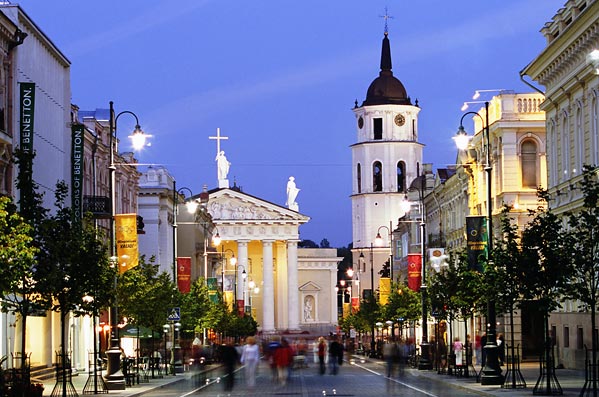
Apesar de ser um país geográfica e demograficamente pequenino (para além de gelado), a Lituânia conseguiu com grande esmero recuperar da crise que a afectou há alguns anos atrás. Segundo este artigo do EUObserver, a mudança de governo no auge da crise em 2008, o não pedido de ajuda ao FMI e a manutenção da confiança dos mercados internacionais foram três dos principais motivos desta recuperação. Aqui fica a conclusão do especialista que levou a cabo um estudo profundo desta crise, que poderá, quem sabe, servir como exemplo:
"Thanks to its victory over the financial crisis, Lithuania is readying itself to adopt the euro in 2014. As a member of the eurozone, Lithuania would be entitled to ample ECB credit, so that the frightful liquidity squeeze will never be repeated.
One of the best kept secrets in Europe is how well the current Lithuanian government has managed the nation’s economy. The country’s international competitiveness had never been seriously undermined, but now it has improved significantly. The Lithuanian government has proven that internal devaluation was both possible and beneficial."
sábado, 26 de novembro de 2011
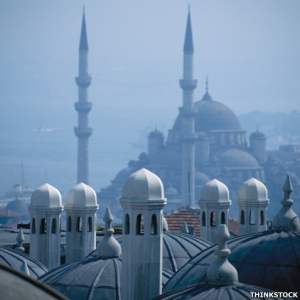
"Future of Arab Spring and Turkey"
quinta-feira, 24 de novembro de 2011
The Eurasian Economic Union

Ora pois parece mesmo verdade que a União Económica Eurasiática (não tenho certeza quanto a esta tradução) vai avançar. Pelo menos, Medvedev (ou será Putin?) começou já a lançar as primeiras pedras do seu tão querido e desejado projecto de voltar a juntar o que puder da sua antiga URSS. O Cazaquistão e a Bielorrússia foram os primeiros a assinar, com a Rússia, uma declaração cujo objectivo último é a união económica da Eurásia.
Esta União basear-se-á na experiência da UE e está aberta a qualquer país ex-soviético. Para quem achava que a queda do império da União Soviética foi a maior tragédia do século XX, este passo tem o seu simbolismo e a sua relevância. A acompanhar com bastante atenção.
quarta-feira, 23 de novembro de 2011
A liderança
A capacidade liderança é uma característica muito apreciada em política e existem inúmeros estudos que tentam perceber o que justifica o carácter carismático e a empatia que certos líderes constróem em relação aos seus pares, cidadãos, etc. Erdogan seria, na minha opinião, um bom estudo de caso, pois, tal como comprovará o próximo número da revista Time, o Primeiro-Ministro turco, para além da sua atestada popularidade no país, é o líder mais admirado pelos Árabes.

Apesar de, democraticamente, Erdogan não ser o líder ideal, nomeadamente no que toca a liberdade de expressão, a verdade é que os cidadãos árabes consideram-no como o ideal mesmo para governar os seus países.
Para mim, e apesar do discutível valor que esta sondagem possa eventualmente ter, um líder como Erdogan numa Turquia dentro da União Europeia, juntamente com outros factores, faria desta organização um actor influente e, quem sabe, respeitado na sua vizinhança do Médio Oriente. Um ponto extra na inconsistente política externa europeia.
terça-feira, 22 de novembro de 2011
E mais um arrelio
Apesar de a Turquia ser tão candidata como os actuais restantes candidatos à entrada na União Europeia (leia-se Croácia, Macedónia, Islândia e Montenegro), não tem ainda um acordo com a UE em relação à isenção da necessidade de vistos para entrar no espaço europeu e vice-versa, e nem parece que venha a ter tão cedo tal é o estado das coisas. Na realidade, a União tem vindo a promover conversações com países como a Moldávia, a Geórgia ou mesmo a Rússia para que se exclua a necessidade de visto e os cidadãos circulem livremente. Esta é mais uma pedrinha no sapato das relações UE-Turquia, pejada de peconceito e interesses (ainda por cima mal calculados) nacionais, que arrelia, com razão, os turcos. E a mim também.

(As prospecções apontam para a Turquia como a segunda maior economia europeia, logo a seguir à alemã, em 2050.)
domingo, 20 de novembro de 2011
O dedo na ferida do Ocidente
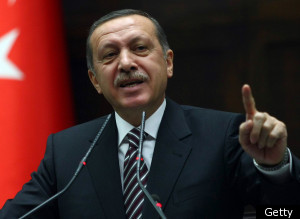
Erdogan, primeiro-ministro turco, parece ter posto o dedo na ferida: acusou o Ocidente de não intervir, pelo menos diplomaticamente de forma mais activa, nos tumultos na Síria que têm causado a morte a centenas de civis que lutam por um regime mais livre e democrático. Depois de ter imposto algumas sanções do foro económico com aquele país, cujo líder era, antes, uma aliado e um amigo pessoal, Erdogan exige que os países europeus e a própria Liga Árabe seja mais rígida com Assad para terminar com o massacre que o seu regime tem perpetrado.
sábado, 19 de novembro de 2011
A academia turca
Académicos turcos demitiram-se em massa da Academia de Ciências Turca após revelada a intenção do governo de controlar as nomeações para aquela instituição, o que a deixaria, naturalmente, mais dependente dos órgãos de governação.
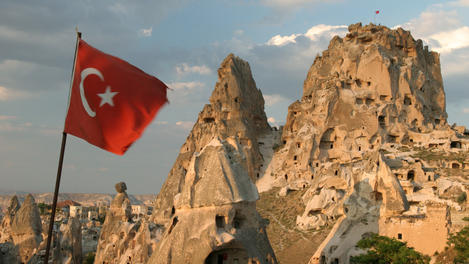
Se esta intenção revela alguma falta de carácter democrático do governo de Erdogan e uma violação clara de vários princípios centrais da democracia, por outro lado a consciência democrática da elite académica é igualmente um sinal de que a sociedade civil está alerta para questões deste tipo e manifestam-se, democraticamente, contra tais situações, prometendo criar uma nova associação.
sexta-feira, 18 de novembro de 2011
As relações Síria-Turquia

Apesar de terem sido grandes aliados e parceiros económicos, o ataque contínuo de Assad à sua população fez com que Erdogan perdesse a paciência com os vizinhos e os sancionasse economicamente, cortando o fornecimento de energia eléctrica. Como tem sido já avisado por vários académicos, a energia desempenha um papel cada vez mais fundamental na diplomacia actual e isso provou-se por este pequeno acto simbólico (sim, porque a Síria não depende desta fonte de energia). Ainda assim, a posição turca contribui para um ainda maior isolamento internacional do regime de Assad, cujos aliados estarão reduzidos ao Irão e possivelmente a Rússia. Com a pressão a aumentar, o presidente sírio já libertou algumas centenas de detidos, no que parece ser uma tentativa desesperada de recuperar algum aliado. A Liga Árabe tem adoptado igualmente uma posição muito crítica e, mais cedo ou mais tarde, o regime cairá. Com isto, queria destacar que:
1) A Turquia tem estado atenta aos problemas democráticos dos seus vizinhos;
2) A Turquia suporta a democracia;
3) A pressão internacional é um dos factores responsáveis pela democratização dos países.
quarta-feira, 16 de novembro de 2011
A quem?

Li ontem no Hürriet Daily News que a China vai atribuir o seu prémio equivalente ao Nobel da Paz a Vladimir Putin. Claro que não me parece esta a individualidade de maior relevância para esta área e a explicação chocou-me: "outstanding in keeping world peace". Honestamente, não consigo lembrar-me de nada que o senhor tenha feito de tão extraordinário pela paz. Ou, pensando melhor, será que estariam a referir-se à forma como usou e usa os seus recursos energéticos para atingir os seus objectivos políticos? Ou talvez seja por causa da Guerra na Ossétia do Sul em 2008. Não, já sei: como diz a notícia, foi por Putin ter-se manifestado contra o bombardeamento da Líbia. Pois, deve ser isso. Atira-se a matar quando alguém quer a independência e não se mata quando alguém subjuga uma população inteira.
terça-feira, 15 de novembro de 2011
Call for Papers
Call for Papers: Conference on The Governance of Asylum and Migration in the European Union at the University of Salford, 26-27 January 2012
We invite abstracts from both advanced research postgraduate students and established researchers for our multidisciplinary conference on 'The Governance of Asylum and Migration in the European Union', to be held at the University of Salford (Greater Manchester) on 26-27 January 2012. The conference aims to assess the evolution of asylum and migration policies in the European Union in a multilevel governance perspective. It considers both the EU and the national levels and the interactions between these levels in a multidisciplinary perspective and with the input of practitioners. The conference is generously funded by a grant of the European Commission Jean Monnet Programme/Lifelong Learning Programme for the EUSIM project (2009-2012).
In recent years, migration and asylum issues have become increasingly contentious in Western Europe and have been at the core of electoral campaigns in several EU Member States. As a result of the often salient character of migration and asylum during electoral campaigns, many states have seen frequent policy reforms in the area of asylum and migration. Over the last few months, regime change in several states in the Middle East has also led to significant migration flows, prompting renewed talks of 'migration crisis' in several European states and further changes to policies. In addition, asylum and migration are also policy issues on which the EU has been increasingly cooperating, in particular since 1999. The Stockholm programme adopted in 2009 foresees the development of a 'Europe of responsibility, solidarity and partnership in migration and asylum matters', which would have a 'dynamic and comprehensive migration policy' based on the so-called 'Global Approach to Migration', a Common European Asylum System (CEAS) and an integrated border management system for the EU's external borders. In turn, these EU policy developments have had a significant impact on the national policies of the Member States. The influence of the EU over the Member States is set to become increasingly important as the EU seeks to go beyond minimum standards to adopt common standards with respect to various issues, most notably in the field of asylum.
In this fast-changing context, this conference aims to study more closely the interactions between the European Union and its Member States in the field of asylum and migration. It seeks to better understand
- how Member States shape the EU asylum and migration policy
- how the EU asylum and migration policy shapes domestic politics and policies in the field of asylum and migration.
The conference organisers therefore invite abstracts of papers tackling, amongst others, the following questions:
- What has been the role of specific Member States or groups of Member States in the development of the EU asylum and migration policy?
- What has been the impact of the EU asylum and migration policy on domestic policies in Europe? How far have national asylum and migration policies become Europeanised?
- What has been the impact of the EU asylum and migration policy on third states? To what extent have third states influenced the EU asylum and migration policy?
- What has been the impact of domestic policies and politics (including bilateral relations of Member States with third states) on the EU asylum and migration policy?
- What has been the impact of EU policies on the solidarity amongst Member States with regard to asylum, migration and borders matters (i.e. burden-sharing)?
- What has been the impact of the EU's enlargement on its asylum and migration policy?
- What have been the consequences of flexible integration arrangements such as Schengen for the EU and for the Member States concerned?
- What have been the main drivers of domestic and EU changes to asylum and migration? What has been the influence of factors such as security concerns and the economic and financial crisis?
- How much do domestic asylum and migration policies in Europe differ from one another?
- Has the involvement of the EU in asylum and migration matters benefited asylum-seekers and migrants?
Confirmed speakers include:
- Professor Heaven Crawley, University of Swansea
- Professor Valsamis Mitsilegas, Queen Mary University London
- Professor Dora Kostakopolou, University of Southampton
- Dr Eiko Thielemann, London School of Economics and Political Science
- Dr Nick Vaughan-Williams, University of Warwick
- Dr Georg Menz, Goldsmith University of London
- Dr Carl Levy, Goldsmith University of London
- Dr Emanuela Paoletti, Somerville College, Oxford
- Dr Liza Schuster, City University London
- Dr Agnieszka Weinar, EUI Florence
- Dr Oleg Korneev, EUI Florence
- Dr Alexandra Schwell, University of Vienna
- Dr Nadine El-Enany, Brunel University
- Dr Sarah Wolff, University College London
- Dr Florian Trauner, Institute for European Integration Research Vienna
- Dr Ariadna Ripoll Servent, Institute for European Integration Research Vienna
- Raul Hernandez Sagrera, IBEI Barcelona
We welcome contributions from all disciplinary perspectives. We aim to contribute to the travel costs of presenters, depending on the number of participants and availability of funds.
If you are interested in presenting a paper, please send the following information to the organisers Dr Christian Kaunert (c.kaunert@salford.ac.uk) and Dr Sarah Leonard (s.leonard@salford.ac.uk) by Monday 5 December 2011:
1. An abstract of up to 250 words
2. A brief bio of up to 250 words
3. Your contact details:
a. Name
b. Institution
c. Full Postal Address
d. Email address
Please do not hesitate to get in touch should you have any questions.
Best regards,
Christian Kaunert & Sarah Leonard
Dr Christian Kaunert
Senior Lecturer in EU Politics & International Relations, University of Salford, UK
Marie Curie Senior Research Fellow, European University Institute Florence, Italy
Editor Journal of Contemporary European Research: www.jcer.net <http://www.jcer.net/>
Executive Committee Member UACES: www.uaces.org <http://www.uaces.org/>
School of Humanities, Languages, and Social Sciences, Centre for European Security, University of Salford
Crescent House, Salford, Gr. Manchester, M5 4WT, UK
E-mail: c.kaunert@salford.ac.uk
Tel.: +44(0)161 295 4839
We invite abstracts from both advanced research postgraduate students and established researchers for our multidisciplinary conference on 'The Governance of Asylum and Migration in the European Union', to be held at the University of Salford (Greater Manchester) on 26-27 January 2012. The conference aims to assess the evolution of asylum and migration policies in the European Union in a multilevel governance perspective. It considers both the EU and the national levels and the interactions between these levels in a multidisciplinary perspective and with the input of practitioners. The conference is generously funded by a grant of the European Commission Jean Monnet Programme/Lifelong Learning Programme for the EUSIM project (2009-2012).
In recent years, migration and asylum issues have become increasingly contentious in Western Europe and have been at the core of electoral campaigns in several EU Member States. As a result of the often salient character of migration and asylum during electoral campaigns, many states have seen frequent policy reforms in the area of asylum and migration. Over the last few months, regime change in several states in the Middle East has also led to significant migration flows, prompting renewed talks of 'migration crisis' in several European states and further changes to policies. In addition, asylum and migration are also policy issues on which the EU has been increasingly cooperating, in particular since 1999. The Stockholm programme adopted in 2009 foresees the development of a 'Europe of responsibility, solidarity and partnership in migration and asylum matters', which would have a 'dynamic and comprehensive migration policy' based on the so-called 'Global Approach to Migration', a Common European Asylum System (CEAS) and an integrated border management system for the EU's external borders. In turn, these EU policy developments have had a significant impact on the national policies of the Member States. The influence of the EU over the Member States is set to become increasingly important as the EU seeks to go beyond minimum standards to adopt common standards with respect to various issues, most notably in the field of asylum.
In this fast-changing context, this conference aims to study more closely the interactions between the European Union and its Member States in the field of asylum and migration. It seeks to better understand
- how Member States shape the EU asylum and migration policy
- how the EU asylum and migration policy shapes domestic politics and policies in the field of asylum and migration.
The conference organisers therefore invite abstracts of papers tackling, amongst others, the following questions:
- What has been the role of specific Member States or groups of Member States in the development of the EU asylum and migration policy?
- What has been the impact of the EU asylum and migration policy on domestic policies in Europe? How far have national asylum and migration policies become Europeanised?
- What has been the impact of the EU asylum and migration policy on third states? To what extent have third states influenced the EU asylum and migration policy?
- What has been the impact of domestic policies and politics (including bilateral relations of Member States with third states) on the EU asylum and migration policy?
- What has been the impact of EU policies on the solidarity amongst Member States with regard to asylum, migration and borders matters (i.e. burden-sharing)?
- What has been the impact of the EU's enlargement on its asylum and migration policy?
- What have been the consequences of flexible integration arrangements such as Schengen for the EU and for the Member States concerned?
- What have been the main drivers of domestic and EU changes to asylum and migration? What has been the influence of factors such as security concerns and the economic and financial crisis?
- How much do domestic asylum and migration policies in Europe differ from one another?
- Has the involvement of the EU in asylum and migration matters benefited asylum-seekers and migrants?
Confirmed speakers include:
- Professor Heaven Crawley, University of Swansea
- Professor Valsamis Mitsilegas, Queen Mary University London
- Professor Dora Kostakopolou, University of Southampton
- Dr Eiko Thielemann, London School of Economics and Political Science
- Dr Nick Vaughan-Williams, University of Warwick
- Dr Georg Menz, Goldsmith University of London
- Dr Carl Levy, Goldsmith University of London
- Dr Emanuela Paoletti, Somerville College, Oxford
- Dr Liza Schuster, City University London
- Dr Agnieszka Weinar, EUI Florence
- Dr Oleg Korneev, EUI Florence
- Dr Alexandra Schwell, University of Vienna
- Dr Nadine El-Enany, Brunel University
- Dr Sarah Wolff, University College London
- Dr Florian Trauner, Institute for European Integration Research Vienna
- Dr Ariadna Ripoll Servent, Institute for European Integration Research Vienna
- Raul Hernandez Sagrera, IBEI Barcelona
We welcome contributions from all disciplinary perspectives. We aim to contribute to the travel costs of presenters, depending on the number of participants and availability of funds.
If you are interested in presenting a paper, please send the following information to the organisers Dr Christian Kaunert (c.kaunert@salford.ac.uk) and Dr Sarah Leonard (s.leonard@salford.ac.uk) by Monday 5 December 2011:
1. An abstract of up to 250 words
2. A brief bio of up to 250 words
3. Your contact details:
a. Name
b. Institution
c. Full Postal Address
d. Email address
Please do not hesitate to get in touch should you have any questions.
Best regards,
Christian Kaunert & Sarah Leonard
Dr Christian Kaunert
Senior Lecturer in EU Politics & International Relations, University of Salford, UK
Marie Curie Senior Research Fellow, European University Institute Florence, Italy
Editor Journal of Contemporary European Research: www.jcer.net <http://www.jcer.net/>
Executive Committee Member UACES: www.uaces.org <http://www.uaces.org/>
School of Humanities, Languages, and Social Sciences, Centre for European Security, University of Salford
Crescent House, Salford, Gr. Manchester, M5 4WT, UK
E-mail: c.kaunert@salford.ac.uk
Tel.: +44(0)161 295 4839
segunda-feira, 14 de novembro de 2011
Divulgação
Caros leitores,
Não é sem tristeza minha que tenho dedicado pouco tempo a este blogue - a vida pessoal e o doutoramento absorvem grande parte do meu tempo. No entanto, prometo fazer um esforço para voltar a comentar alguns assuntos da actualidade e criar, quem sabe, alguma discussão em torno de alguns assuntos, nomeadamente próximos da minha tese.
Hoje, o motivo do meu post é outro: deixo abaixo o pedido de divulgação de um outro blogue, o Global Pass, promovido pelo Núcleo de Estudantes de Relações Internacionais do Porto, cuja leitura aconselho vivamente por se tratar de mais uma forma de discussão pública dos assuntos internacionais e de consolidar a disciplina no nosso país.
Na sequência de várias iniciativas promovidas por alunos da Faculdade de Letras da Universidade do Porto nos últimos anos, foi criada uma plataforma para todos os estudantes de Relações Internacionais da Universidade do Porto – o Núcleo de Estudantes de Relações Internacionais do Porto (NERIP). Inserido nesta iniciativa, surge o blogue Global Pass - http://nerip.webs.com/apps/blog/ - destinado a alunos de licenciatura e de mestrado, interessados em publicar os seus trabalhos e opiniões. O blogue conta também com a colaboração de professores e de outros profissionais das relações internacionais.
Desta maneira, pretende-se dar a conhecer o que tem sido feito no âmbito das Relações Internacionais na U.Porto. Nesse sentido, gostaríamos de contar com a divulgação do NERIP neste blogue.
sábado, 8 de outubro de 2011

sexta-feira, 30 de setembro de 2011

quarta-feira, 28 de setembro de 2011
"Coffee Futures"
Directamente da Turquia, deixo aqui o trailer de um documentário muito interessante e criativo subordinado ao tema das relações entre o país e a União Europeia. Mas com uma perspectiva, no mínimo, esotérica. Vale a pena ver!
terça-feira, 27 de setembro de 2011
Call for Papers
CALL FOR PAPERS

A Europe of Diversities
19th International Conference of Europeanists
Boston, USA - March 22-24, 2012

Europe is a zone of tremendous diversity. Migration within and to
Europe has generated multicultural societies across the continent.
Europe?s citizens are ruled though an intricate maze of multi-level
governance structures and institutions that range from the local to
the pan-European to the international. In the realm of political
economy, corporations, industries, and states operate in distinct ways
in a variety of different settings, and while the former Eastern
Europe has been reunited with the West, the backgrounds of these two
regions often dictates dissimilar trajectories into the contemporary
era. Historians have focused on exploring not only distinct national
paths to democratization, but also European countries? connection to
former colonies and to minorities within their borders.

Given this extraordinary context, for its 19th International
Conference of Europeanists the Council for European Studies is
interested in having participants reflect on and explore the variety
of diversities within Europe: political, administrative, legal,
geographic, economic, social, cultural, intellectual, and
identitarian. How do these differences operate as sources of
conflict, of exciting ideas, of growth, or of misunderstanding? To
what extent does thinking about Europe?s diversities enhance our
understanding of Europe as a whole?

The Council for European Studies (CES) welcomes proposals for panels,
roundtables, book discussions and individual papers on the study of
Europe broadly defined. We encourage proposals in the widest range of
disciplines, and particularly welcome panels that combine disciplines,
nationalities, and generations. The Conference Program Committee will
accept only two submissions per person and members may only
participate in a maximum of two sessions.

We strongly encourage participants to submit their proposals as part
of an organized panel. Full panel proposals will be given top
priority in the selection process by the program committee.

Proposals must be received by 1 October 2011 and submitted through our
website.

For more information, please consult www.councilforeuropeanstudies.org
Emprego
Admissão de Candidaturas para Director/a Executivo/a da Amnistia Internacional - Portugal
Estão abertas as candidaturas à admissão de um(a) Director(a) Executivo(a) da Secção Portuguesa da Amnistia Internacional. Os interessados devem apresentar a sua candidatura até ao dia 18 de Setembro acompanhadas dos seguintes documentos:- Carta de motivação;
- Documento comprovativo das habilitações literárias, mediante fotocópia simples e legível do certificado autêntico ou autenticado, donde conste a média final do curso;
- Fotocópia do bilhete de identidade válido e do cartão de identificação fiscal ou do cartão de cidadão;
- Curriculum Vitae detalhado, actualizado e datado, devidamente assinado, donde conste designadamente as acções de formação, congressos ou afins, estágios e experiência profissional, devidamente comprovados por fotocópias simples e legíveis de documentos autênticos ou autenticados, sob pena dos mesmos não serem considerados.
Amnistia Internacional Portugal
Av. Infante Santo, n.º 42, 2.º
1350-179 Lisboa
MÉTODOS DE SELECÇÃO APLICÁVEIS
1. Análise curricular;
2. Entrevista profissional de selecção e avaliação de competências (apenas aos candidatos seleccionados na análise curricular);
3. Entrevista e provas de avaliação psicológica (apenas aos candidatos seleccionados na entrevista Profissional de selecção e avaliação de competências).
Especificações do Candidato a Director/a Executivo/ da Amnistia Internacional - Portugal
segunda-feira, 12 de setembro de 2011
Estágio
ESTÁGIOS@OP
Está aberta a primeira fase de candidaturas para o programa de estágios académicos e curriculares do Observatório Político, destinado a proporcionar a jovens estudantes e recém-licenciados uma experiência de desenvolvimento de funções em contexto de trabalho numa associação científica de estudos políticos. A primeira edição dos Estágios @OP pretende apoiar a formação de jovens com qualificação superior num contexto académico, permitindo a transmissão de informação e conhecimentos entre participantes e investigadores. As candidaturas devem ser enviadas por correio electrónico até 15 de Setembro de 2011.
Para mais informações, consulte a página do programa.
quarta-feira, 7 de setembro de 2011
Call for Papers
CfP: Memory - contestation - identity: European politics of remembrance
19th International Conference of Europeanists
Boston, Massachusetts • March 22-24, 2012
Organized by the Council for European Studies
Even if research on questions of memory and identity have permeated empirical political science in the past few years, there is still a lack of comprehensive studies dealing with both transnational pan-European politics of remembrance and the question if and how it is connected to an unfolding European public sphere.
For the next Council for European Studies Conference taking place from 22-24 March 2012 in Boston, we are looking for research projects which examine exactly this nexus between European politics of remembrance, European identity and an emerging European public sphere from different angles. All scholars dealing with politics of remembrance on the European level are invited to submit a proposal. Papers could investigate for example the way the EU has dealt publicly with the memory of WWII, discuss the emergence of a European public sphere vis-à-vis the remembrance of oppression and dictatorship, map European efforts to implement a standardised negative founding myth on the basis of the Holocaust or examine the continuous conflict between the memory of Stalinism and Nazism/Fascism on the European level (to give just a few examples).
The panel thus seeks to investigate an area that so far has been under-researched. While the amount of studies exploring politics of memory on the national level has seen an enormous increase in the past years, there is little evidence of research dealing with issues and actors on the European level. Scholars concentrating particularly on the manifold relations between pan-European politics of remembrance, questions of identity and (a) European public sphere(s) are therefore particularly encouraged to apply.
Paper proposals (250 words abstracts) should be sent to alinesierp@gmail.com by September 17, 2011.
We are planning to include suitable contributions in an edited volume that are published as part of the ECPR - Studies in European Political Science series.
Please do not hesitate to contact me if you have further questions! We are looking forward to your contributions.
Subscrever:
Mensagens (Atom)