A todos os leitores e amigos do Internacionalizzando, um óptimo Natal e um maravilhoso 2011!
Regressarei em 2011 e conto convosco!

Um abraço a todos,
André Pereira Matos


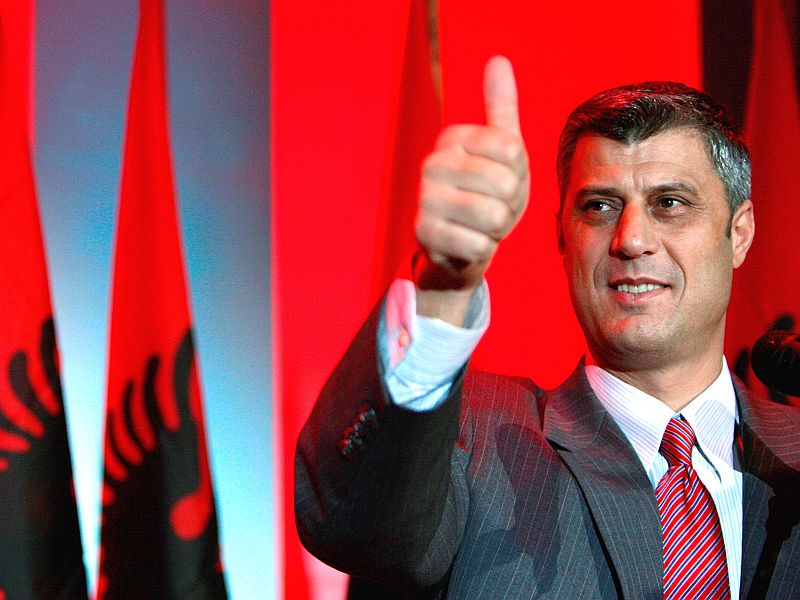 As eleições neste jovem país, as primeiras desde a declaração da independência, têm dado que falar. Hashim Thaçi, líder do partido cujas sondagens apontavam como vencedor (apesar da diferença desse PDK para o da oposição, o LDK, não ser muito grande) apresentou um discurso virado para o Ocidente, para a União Europeia, para a NATO. À partida, este líder teria tudo para vencer. No entanto, os 45% de desemprego e os 2 milhões de habitantes a viver abaixo do limiar da pobreza dificultaram a popularidade de Thaçi, também ele associado à corrupção. Pior: além disso, a oposição acusa-o de fraude nas eleições, o que, convenhamos, não é muito positivo para alguém que ajudou a fundar a democracia kosovar. Podia ter sido uma espécie de Mustafa Kemal kosovar. Mas a verdade é que não foi. Ou pelo menos não tem sido.
  No contexto da não aprovação de uma moção de censura ao governo de Berlusconi por três votos apenas, sugiro a leitura do post do Pedro Fragoso no seu Tijolo com Tijolo.
 A notícia da libertação de vários presos políticos em Cuba parecia fazer antever a abertura do país em termos democráticos. No entanto, a proibição da saída de Fariñas do país para ir receber um prémio a Estrasburgo, no âmbito da liberdade de expressão, pode deixar-nos menos crentes relativamente a essa evolução do governo cubano.


 A segunda notícia também é negativa para o Presidente iraniano: segundo este artigo do Público, o Parlamento iraniano está a debater a impugnação de Ahmadinejad. Essa discussão foi proibida pelo Supremo Líder, mas mesmo assim há deputados que estão a lutar para que ela regresse àquela instituição. Não contava, sinceramente, com uma oposição do Parlamento tão visível; as desavenças são conhecidas, mas algo tão claro e "descarado" não era, para mim, previsível, ainda para mais com a oposição do ayatollah Ali Khamenei.
 Mas acha que Portugal está já a perder reputação?

Conference on Supranational Governance and European Security at the University of Salford
27-28 January 2011
We invite abstracts from both advanced research postgraduate students and established researchers for our multidisciplinary conference on 'Supranational Governance and European Security', to be held at the University of Salford (Greater Manchester) on 27-28 January 2011. The conference will aim to assess the role of European institutions in European security, as well as substantive security policies in Europe, in a multidisciplinary perspective. It is funded by the European Commission Jean Monnet Programme/Lifelong Learning Programme (EUSIM project), as well as the Manchester Jean Monnet Centre of Excellence.The European Union (EU) is making strong inroads into areas of security traditionally reserved to states. Many scholars who analyse the EU's role in the security field tend to focus on military-related problems. However, given the characteristics of today's security problems, military capabilities do not represent the entire range of issues in security policies. Security concerns are increasingly triggered by fundamental challenges, such as terrorism, climate change, migration, and many other 'soft security issues'. The EU itself fully expressed this range of threats in the European Security Strategy (ESS) of 2003.The main aim of this conference is to bring together scholars with a research interest in European Union security issues and institutions in their broadest sense. It will evaluate the increasing role of EU institutions in the governance of European security, which is itself becoming increasingly important for the process of European integration in general. The proposed conference is aimed at all academic members of staff and students who share an interest in European security issues and institutions.Confirmed speakers include:Professor Emil Kirchner, University of EssexProfessor Jolyon Howorth, Yale UniversityProfessor Thomas Christiansen, University of MaastrichtProfessor Ben Tonra, University College DublinProfessor Michael Smith, Loughborough UniversityProfessor David Allen, Loughborough UniversityProfessor Andrew Geddes, University of SheffieldProfessor Sophie Vanhoonacker, University of MaastrichtProfessor Richard Whitman, University of BathProfessor Neill Nugent, Manchester Metropolitan UniversityProfessor Thierry Balzacq, Namur UniversityProfessor John Vogler, Keele UniversityDr Javier Argomaniz, University of St AndrewDr Oldrich Bures, Metropolitan University PragueDr. David Galbreath, University of BathDr. Tom Casier, University of Kent BrusselsDr. Giselle Bosse, University of MaastrichtDr. Alistair Shepherd, Aberystwyth UniversityDr. Dimitris Papadimitriou, Manchester UniversityWe welcome paper proposals on any aspect of European Security and Supranational Governance engaging with past and future developments in the area, in particular after the Lisbon Treaty:* papers examining the role of European institutions in European security matters, including EU institutions, agencies, etc* papers examining European policies on security issues in the broad sense, pre and post Lisbon;* papers dealing with individual CFSP policies, as well as the External Action Service;* papers dealing with individual AFSJ policies, such as: asylum, migration, borders, criminal justice and police cooperation, counter-terrorism and intelligence cooperation.We welcome contributions from all disciplinary perspectives. We aim to contribute to the travel costs of presenters, depending on the number of participants and availability of funds.If you are interested in presenting a paper, please send the following information to the organisers Dr Christian Kaunert (c.kaunert@salford.ac.uk) and Dr Sarah Leonard (s.leonard@salford.ac.uk) by Friday 17 December 2010:1. an abstract of up to 250 words2. your contact details:a. Nameb. Institutionc. Full Postal Addressd. Email addressPlease do not hesitate to get in touch should you have any questions.